Iceberg Model
A problem you thought you had solved comes back. You make peace - and a month later the same fight, word for word. You clean up your desk - a week later it is buried again. You put out one fire at work - the next one flares up right away, exactly the same. It feels like plain bad luck. In reality we keep fixing the tip of the iceberg, and it keeps freezing back from what is under the water.
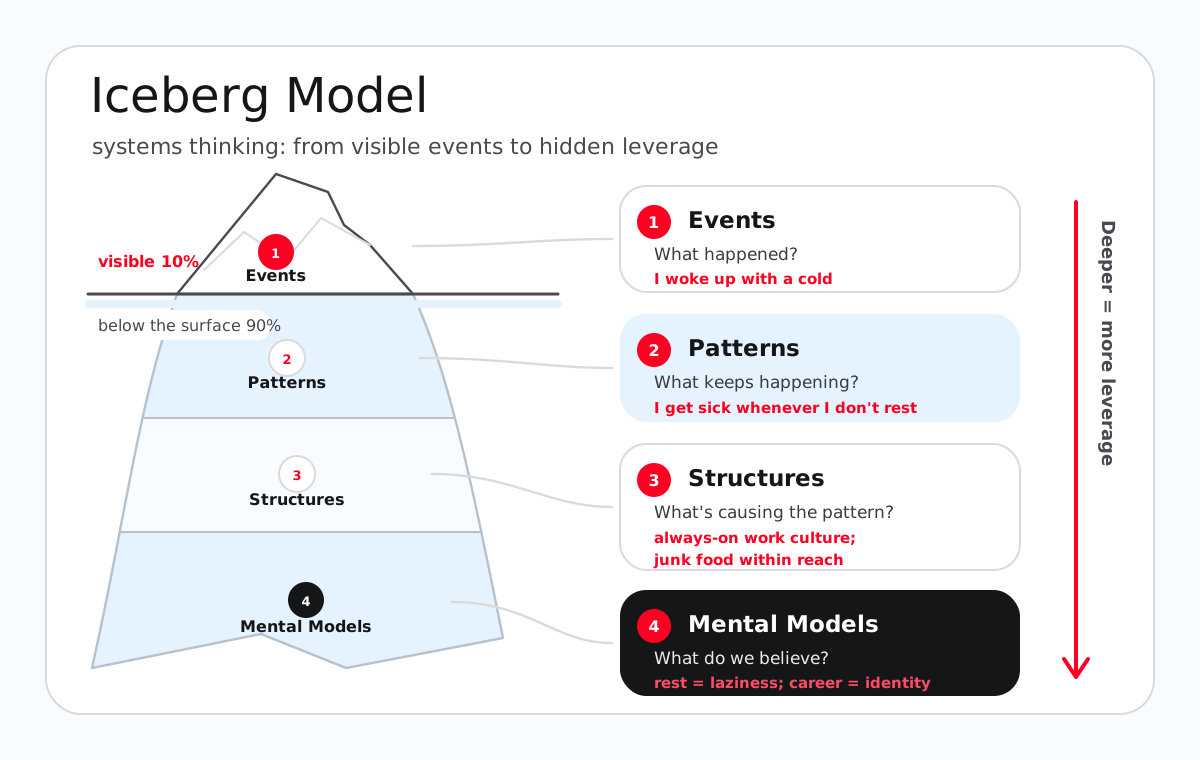
The iceberg model is a simple systems thinking tool for seeing this. The metaphor is direct: only one tenth of an iceberg is above the water, the other nine tenths are hidden - and it is these invisible nine tenths that catch the ocean currents and decide where it floats. Problems work the same way. What we notice and rush to react to is the tip. What produces the problem is hidden below. The model suggests going underwater - four levels deep.
The idea grew out of systems thinking, Peter Senge made it popular in “The Fifth Discipline,” and why depth matters so much was explained best by Donella Meadows. Now level by level, from top to bottom.
Level 1 - Events
This is the surface. What happened just now: got sick, was late, had a fight, a bug went into the release. The only level we usually notice - and the only one we react to by habit: we put out the symptom. Sometimes that is enough: got wet - changed clothes, done. But if the same trouble keeps coming back, the cause is not here, and treating only the tip is useless.
The question of this level: what happened?
Level 2 - Patterns
Slightly below the surface, the repeats become visible. If you look closer, the event is not a one-off - it has happened before, more than once. I catch a cold every time I go weeks without enough sleep. The traffic jam at this crossing - every weekday around five. Bugs crawl not into this particular release, but into every one. As soon as you see the pattern, a new possibility appears: not just to react, but to predict and prepare in advance.
The question of this level: what repeats over time?
Level 3 - Structures
Deeper down lies what produces these repeats. You ask “why does this keep happening?” - and you run into some structure. It is convenient to divide them into a few kinds:
- Physical setup - roads, the placement of things, the environment. The healthy food is on the other side of the city, and the chocolate vending machine stands right next to the office.
- Organizations and rules - a new promotion policy that raises the tension; deadlines with no time for review built into them.
- Habits and rituals - eating stress away, grabbing the phone first thing in the morning. So ingrained that we no longer notice them.
A structure, unlike an event, can be rebuilt - and then the repeats disappear on their own, without a daily fight with symptoms.
The question of this level: what creates this pattern - what rules, connections, setup?
Level 4 - Mental models
The very bottom and the most invisible. These are the beliefs, expectations and values the whole structure stands on. Why is the promotion policy exactly like this? Why do I eat my stress away again and again instead of stopping? Underneath are quiet assumptions: “resting means being lazy,” “my career is who I am,” “healthy food is too expensive.” We absorbed them unnoticed - from family, from the environment - and most often we do not even realize we carry them. They are the hardest to see, and that is exactly why they hold everything else.
The question of this level: what do we believe here as a given?
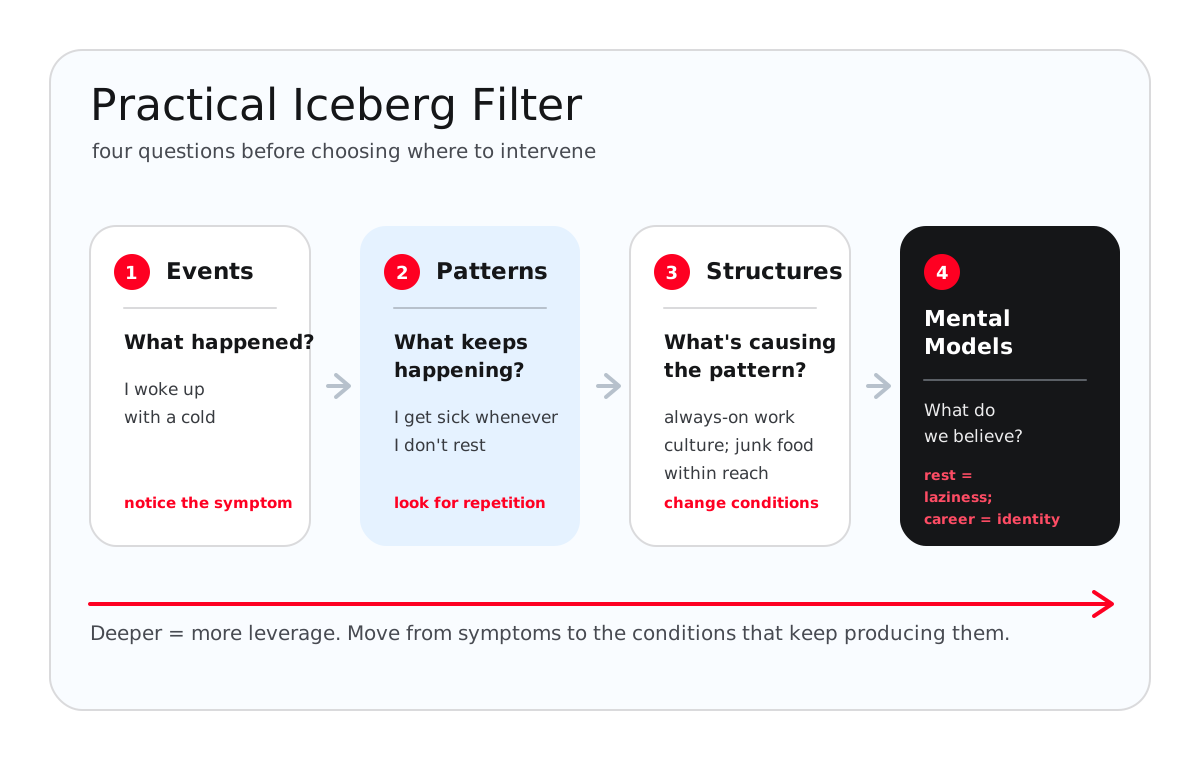
Any problem can be walked through all four levels. A cold: the event - got sick. The pattern - I get sick when I don’t rest. The structure - a job where stopping is not done, and the habit of eating tiredness away with whatever is around. The mental model - “rest is for the weak.” Treating one runny nose here is pointless: it will come back, because down below everything stayed as it was.
The deeper you go, the longer the lever
Here is the main idea of the model. The lower you go, the stronger and more lasting the change - but the harder it is too. Changing a number at the top is easy (take a pill, add one more deadline), just almost useless. Changing a belief is hard - but together with it, everything that stood on it changes too.
Donella Meadows called such places leverage points: a spot in the system where a small effort gives a big shift. And she added a bitter observation: most often people intuitively feel where this lever is - and push it with all their strength in the opposite direction. They treat the symptom harder and harder, wondering why things only get worse.
Where to use the iceberg model
When a problem keeps coming back. This is the main signal to go underwater. If something repeats, it is useless to fix the event for the hundredth time - you need to look for the pattern, the structure and the belief underneath. A symptom that gets treated again and again is a question not about the symptom.
Your own habits. “I know what to do, and I do the opposite” is almost never about willpower (the event) - it is about the structure around you and the assumption inside. Not scolding yourself for the breakdown, but asking: what in my day provokes it, and what do I believe in that moment.
Conflicts and relationships. The same fight going in circles is not about today’s trigger. The trigger is the tip. Under it - the pattern, the way the relationship is set up, and each person’s quiet beliefs about “how it should be.” Those are worth examining, not the trigger.
Work and the team. If bugs crawl out of every release, punishing someone for this particular one is fixing the event. You need to look at the structure: the processes, the deadlines with no room for review, the team’s habits. Change the setup - and it stops repeating.
News and big problems. Here it is especially easy to get stuck at the level of events: one hurricane, one scandal, one disaster - and the nervous system reacts to each as a separate one. Go down to the pattern and the structure - and it is calmer, and you can see better where there is a lever at all, and where you are only spending yourself.
When you want a quick fix. Sometimes the symptom must be treated right now - give a freezing person shelter tonight instead of discussing the structure of homelessness. That is normal. Just dig down in parallel, otherwise tomorrow the next one will be at the door.
What to do with the iceberg model
- When you notice a problem, don’t rush to solve it - first ask: is this a one-off event, or does it repeat?
- If it repeats - go lower: what structure (rules, environment, habits) produces it, and what belief holds all of it in place.
- Remember: the deeper the change, the more lasting the result - and the harder it is. Quick fixes at the top are almost always temporary.
- Move not only down but also back up: you change a structure or a belief so that, at the top, the events themselves finally change.
- Don’t get stuck in the depth: if a person needs help now, help first, dig into the roots after.
The iceberg model, growth and AI agents
Personal growth is largely the skill of going down this iceberg into yourself: from “I broke down again” (the event) to the pattern, to the structure of your life and, finally, to the beliefs that came by default and that can be consciously rewritten. It is the same work as in any model about awareness: to see the automatism from the outside and choose again, instead of repeating by habit.
It also maps well onto designing AI agents. A bad agent lives at the level of events: it was told - it did, someone complained - it patched the symptom. A good one knows how to go lower and helps you go lower too: to notice that the task keeps repeating, to ask about the structure around it, to gently pull out the belief that makes everything stall. It does not rush to fix the tip - it calmly shows what is under the water. And when you build the system yourself, the same discipline: don’t patch every case separately, change the setup they grow from.
And one more thing, about the environment around us. The feed, the news, the endless notifications hold us exactly at the surface - at the level of events, where we only react. Tools that help us go lower, to the patterns and the structures, give us back what Meadows called the lever: the ability to change, with a small conscious effort, what used to look like plain bad luck.
Sources
- Peter Senge, “The Fifth Discipline” - systems thinking and mental models for organizations; this is where the iceberg model became widely known.
- Donella Meadows, “Leverage Points: Places to Intervene in a System” - why the deeper the intervention, the bigger the lever.
- John Gerber (University of Massachusetts) and the Northwest Earth Institute / Ecochallenge - the teaching version of the four levels, the kinds of structure, and the cold example.