Triune Brain Model
A simple, handy model for understanding why we don’t always behave “reasonably.” It was proposed by the American neuroscientist Paul MacLean in the 1960s: he described the brain as three “floors” built one on top of another, like a nesting doll.
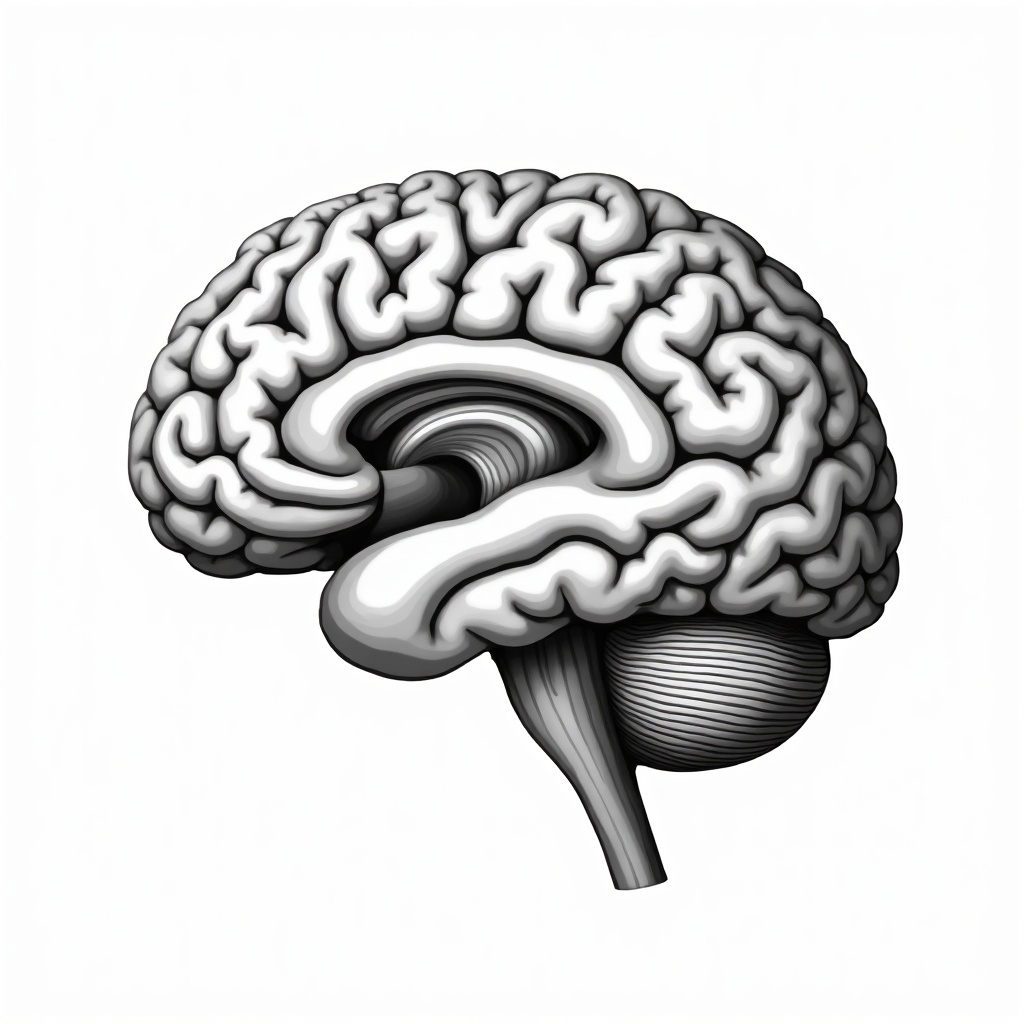
The three “brains”
(The pictures are symbolic: in reality the human neocortex is still quite a thin crust - we have room to grow :))
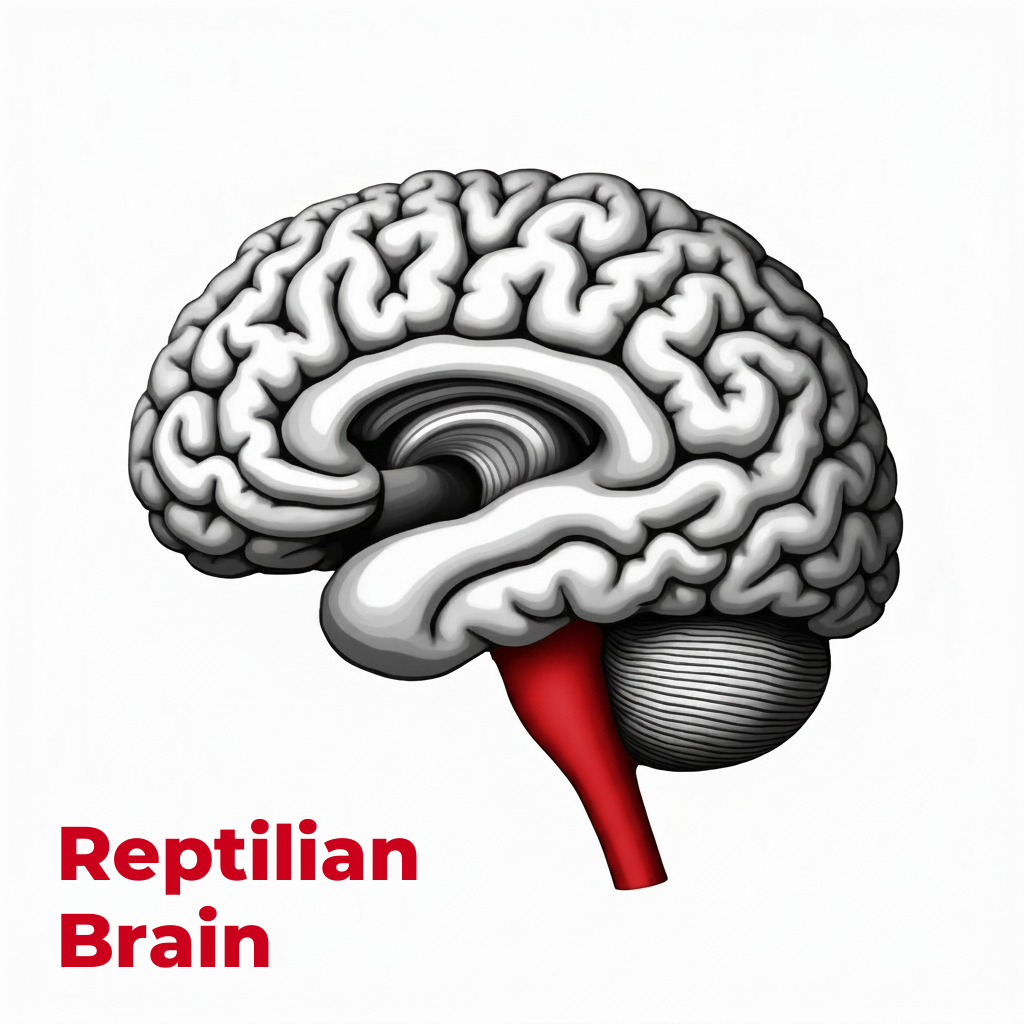
The reptilian brain (the brainstem) is the most ancient one. It is in charge of survival and works automatically: breathing, sleep, instant reactions to threat. Its language is “fight, flee, freeze.” It does not reason - it reacts, earlier than we manage to think.
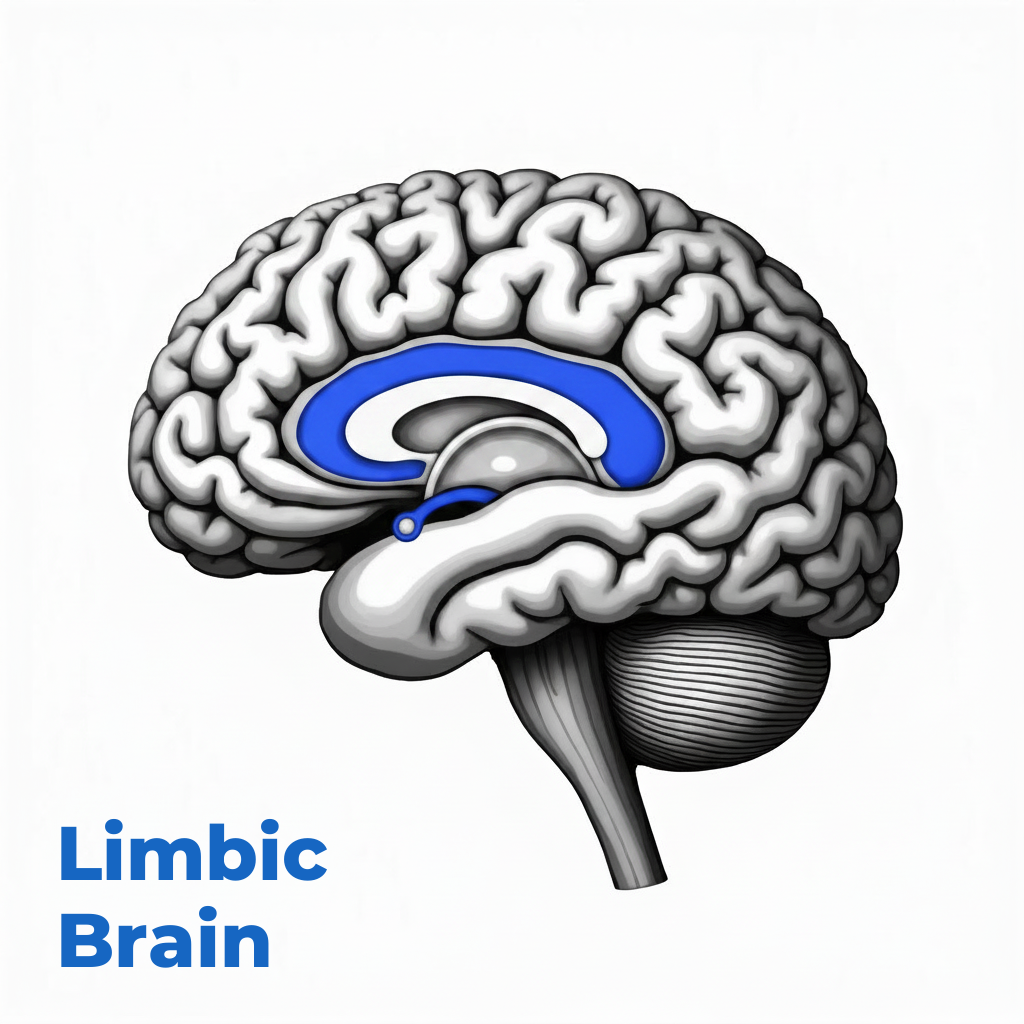
The limbic brain (the middle one) is emotions: fear, joy, attachment, anxiety. We have almost no direct control over it, but it very much decides for us.
The neocortex (the cortex) is reason: logic, planning, speech, weighed decisions, our “I”. The only part whose work we are aware of.
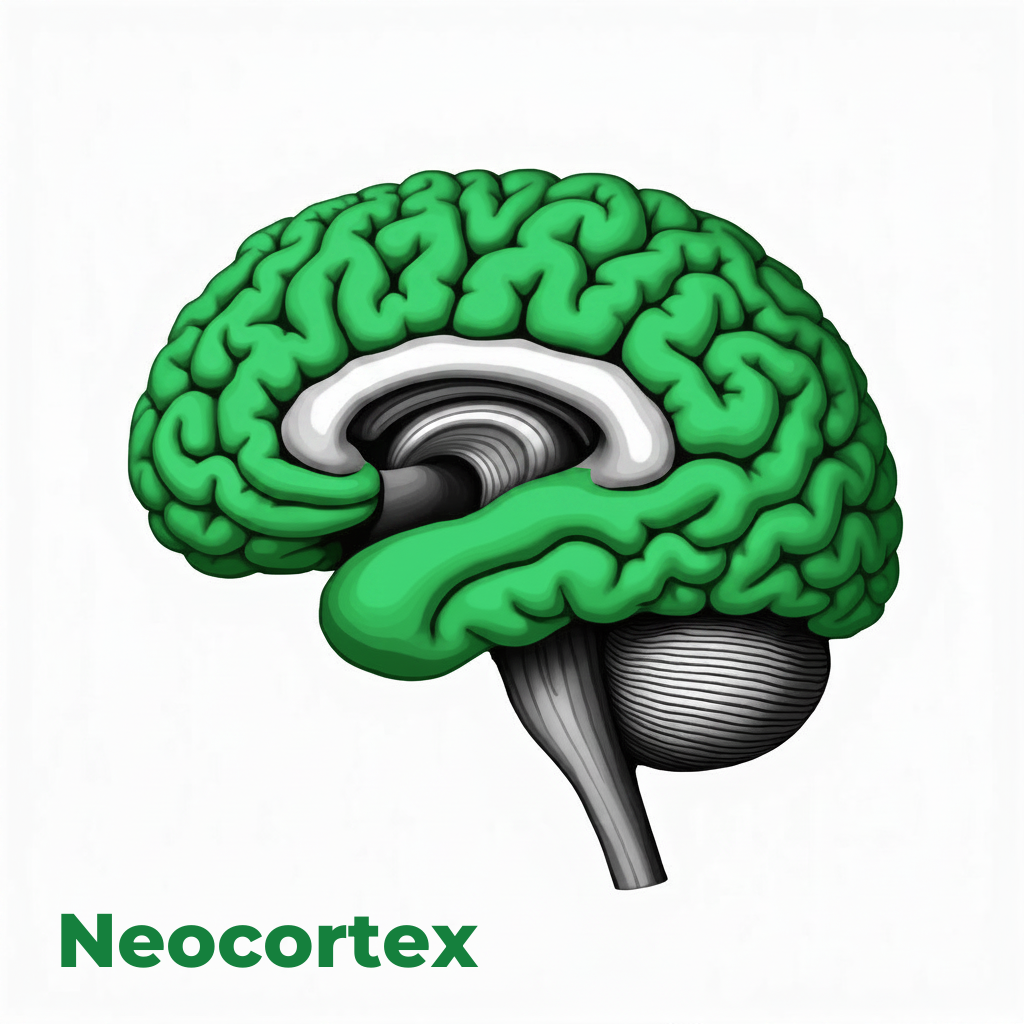
An important detail: the first two floors formed much earlier and work “by default” from birth. The neocortex only matures by the age of twenty or thirty. The youngest - and the weakest in an argument.
Who is really at the wheel
It seems to us that reason is the boss in the head. In reality it is the junior partner: it switches on last and gives up the wheel easily.
When a car is rushing at us, we don’t “decide” to jump away - we have already jumped, or frozen. The reptilian brain fired, a fraction of a second ahead of the cortex. And thank goodness: while the neocortex was still weighing the trajectory, it would have been too late.
When an emotion floods us - anger, hurt, fear - the limbic floor floods the whole system, and the neocortex goes offline. We seem to understand everything, yet we cannot think clearly. That is why decisions made in anger or panic are so often the ones we want to take back later.
And sometimes all three floors pull in different directions: the cortex says “it’s profitable, you should agree,” the limbic says “I don’t want to, it disgusts me,” and the reptilian brain pushes toward something else entirely. Like the swan, the crayfish and the pike of the old fable, each pulling its own way - and we get stuck, agonizing over the choice.
And one more thing, unpleasant but important: most of the time the decision is made by the limbic system, and the cortex then simply finds a reasonable justification for the choice already made. Feeling decides - reason justifies. On top of that, living on emotions and instincts is literally cheaper: the brain spends far less energy on them than on the focused work of the cortex. That is why, by default, we get pulled to the lower floors.
Where to use the triune brain model
This is where the model turns from curious into useful. The rule is simple: before reacting, figure out which floor is at the wheel right now.
Decisions. A big decision made on a strong emotion is almost always a bad one - it was not us who made it, but our limbic system. “Sleep on it” is exactly about this: let the emotion drain away, wait until the cortex comes back, and only then decide.
Communication and conflicts. It is useless to use logic on a person who is flooded - their neocortex is switched off right now, the arguments fly into the void, and often add fuel to the fire. First help them feel that they are safe and heard, and only then move to the substance. Contact first, content second.
Children. A child in a tantrum is the limbic system flooding everything. Explaining and appealing to logic is useless: first hug them and bring back the feeling of safety - and the talk about “how it should have been” comes later, with a cool head.
Yourself under stress. The strongest technique is to notice and name it: “okay, I’m flooded right now, this is the limbic system.” Simply naming the emotion partially brings the cortex back online - and we are somewhat at the wheel again.
Relationships. Closeness is built from the bottom up: first safety (the reptilian brain must stop scanning for threat), then warmth and acceptance (the limbic), and only then the deep conversations about what matters (the cortex).
How we get persuaded. Whole industries - advertising, sales, politics - have long worked by this model, and they work past reason. The techniques are easy to recognize:
- Pain, not benefit. The ancient brain is busy surviving, so it is hooked not by a list of advantages but by relief from pain: “stop overpaying,” not “we have good rates.”
- About you, not about the product. The reptilian brain is egocentric - it reacts instantly to being addressed directly and to whatever concerns it personally.
- The “before and after” contrast. The “was - became” picture is read without any analysis.
- Image and emotion ahead of logic. The brain processes a picture many times faster than text, and emotion persuades stronger than any arguments. Facts come last - for the cortex, so it has something to justify the choice with.
- Scarcity and urgency. “Only three left” hits the survival instinct directly.
This knowledge works both ways. On one side, you start noticing when you are being led not through the head but through the gut - and you stop falling for it. On the other - if you need to get something across yourself (a text, a presentation, a conversation), the order is the same: first hook and let them feel, and only then the arguments. Without the first part they will simply never get to the arguments - the reptilian brain will filter the message out before it reaches consciousness.
Goals and habits. The same model explains the eternal “I know what to do, and I don’t do it.” The plan is the cortex. But the energy for action, that very “I want,” is born lower: if the lower floors do not see what’s in it for them, there will be no “I want” - only “I must,” pushed through by willpower. And willpower runs out, and burnout arrives.
In coaching this is used quite literally. The goal is worded so that the inner “reptile” sees a personal gain - not “company profit” and not an abstract metric, but what I personally get out of it and what it will look like. A big goal is split into small ones - the result is closer that way, and every small finish line replenishes the strength for the next step. And the result is always claimed: “I did this, this is mine” - then the inner floors hand over their energy for the next move much more willingly. In short: reason should not give orders to instinct - it should negotiate with it.
What to do with this
- Notice which floor has switched on - by the body and the tone, not by the words.
- In danger and in the heat of emotion, don’t decide and don’t argue - first cool down yourself, or let the other person cool down.
- The order is always bottom-up: safety first, then emotions, and only then reason.
- To get through to another person - go to their feelings first, not their logic.
- To move yourself off the spot - don’t push with willpower; show the lower floors the personal meaning, and split the path into small wins.
Where our automatic reactions come from
This model has a deeper turn as well. The three floors form one after another, and in childhood: the reptilian - from birth, the limbic - roughly from two to six or seven, the neocortex matures last. And everything that surrounds the child in each of these periods is unconsciously “recorded” into the corresponding floor - as default settings for the rest of life.
Roughly speaking, the early bodily experience - warmth, safety, basic needs met or not - settles into the reptilian floor and later echoes in the relationship with one’s own body and in the background feeling of “I am okay” or “I am not safe.” The slightly later emotional experience - how feelings, boundaries and closeness were treated in the family - is recorded into the limbic floor and shows up in the adult “who am I,” in how we build relationships and what we habitually react to. If a child learned, time after time, to “get upset” or “take offense,” that becomes the default reaction - and it will keep repeating until the person notices it.
This is where the neocortex is needed. It is the only floor that can look at the automatisms of the two lower ones from the outside, notice “I am reacting now the way I did back then, in childhood” - and rewrite the reaction by choice, not by habit. Jung said that the unconscious we have not lived through comes to us as fate; the neocortex is what can take this “fate” back into our own hands.
The triune brain, growth and agents
Personal growth is exactly this quiet work of the neocortex: gathering all three floors into one team, where reason negotiates instead of fighting, and acting more and more often from your best state - by choice, not by reaction. But the same thing unfolds at the level of society. The environment around us keeps hitting the lower floors: the news scares the reptilian brain, the feed rocks the limbic, advertising sells through anxiety and envy. The harder the lower floors get yanked, the less access people have to calm reason - and the worse the shared decisions become. A future worth living in requires the opposite: environments and tools that help us be in our best state, not in our most reactive one.
And this is where AI agents come in. A well-designed agent works exactly by the rule of the triune brain. It does not argue with a person who is flooded - it first brings back the footing, and only then moves to business. It knows how to be non-judging - like a good coach who does not push and does not judge, but helps to see the personal meaning and to notice the small win, so that the inner floors themselves release the energy for the next step. And it can be that “external neocortex” which stays calm when ours goes offline: hold the angry email until morning, remind of the big picture, not let us decide in the heat of the moment. This is exactly how an agent should be built - not as one more source of yanking, but as a support that meets the person on their floor and helps them climb higher.
When AI takes over the routine, a person for the first time gets free resource for what the cortex grew for in the first place - growth, creativity, meaning. But this will only happen if we learn not to get stuck on the lower floors. The triune brain is a small but precise map of this path.